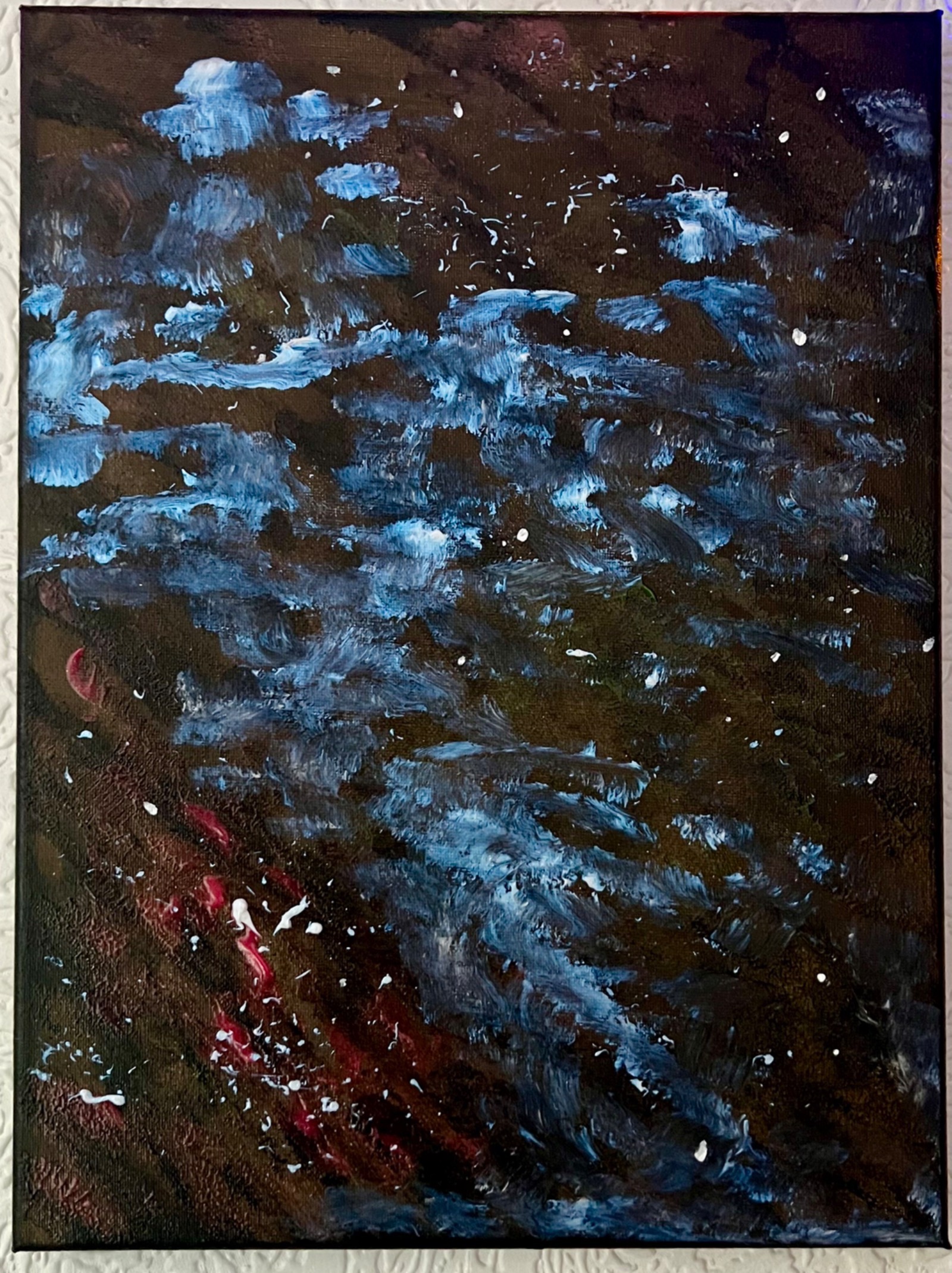
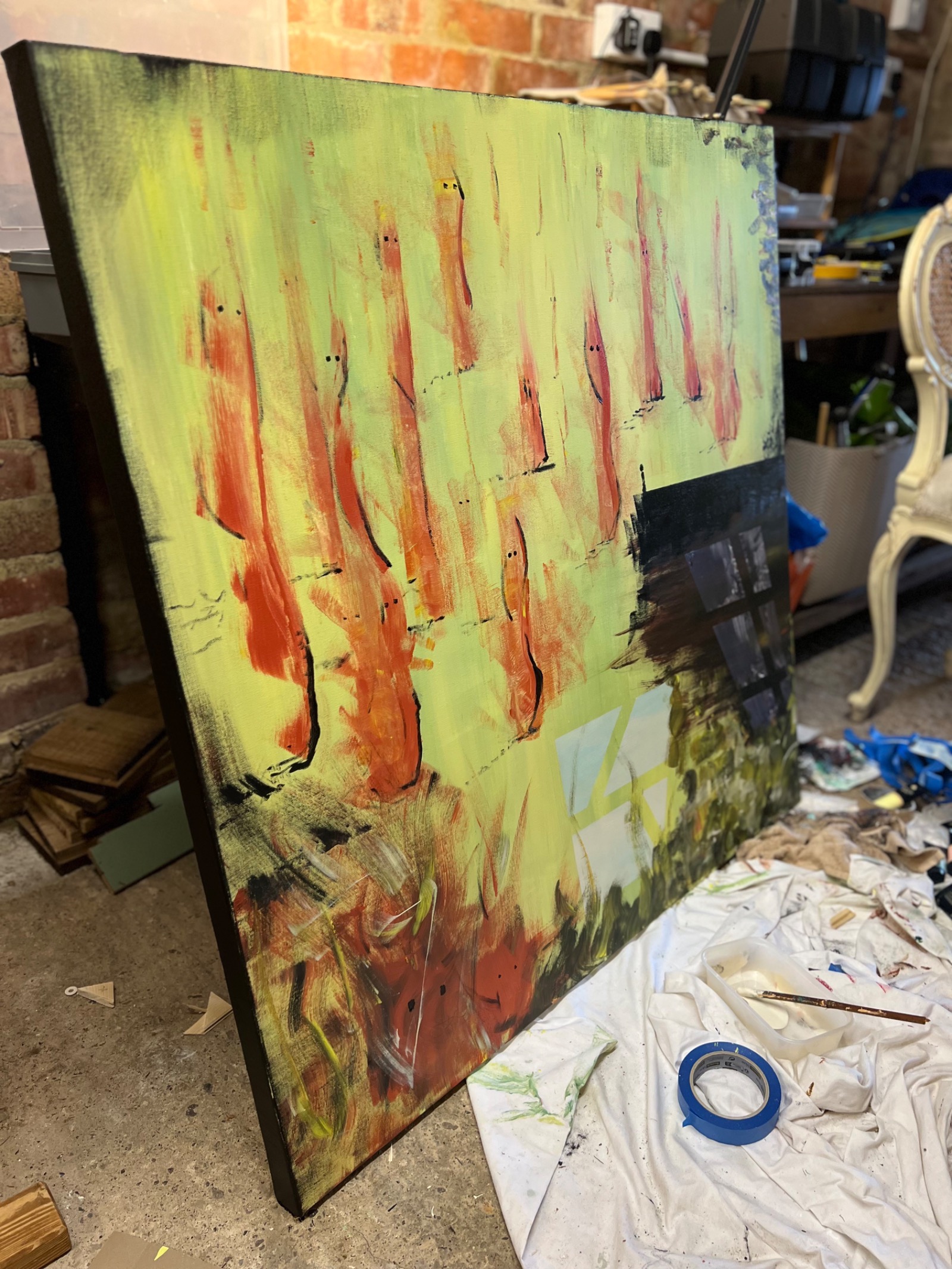
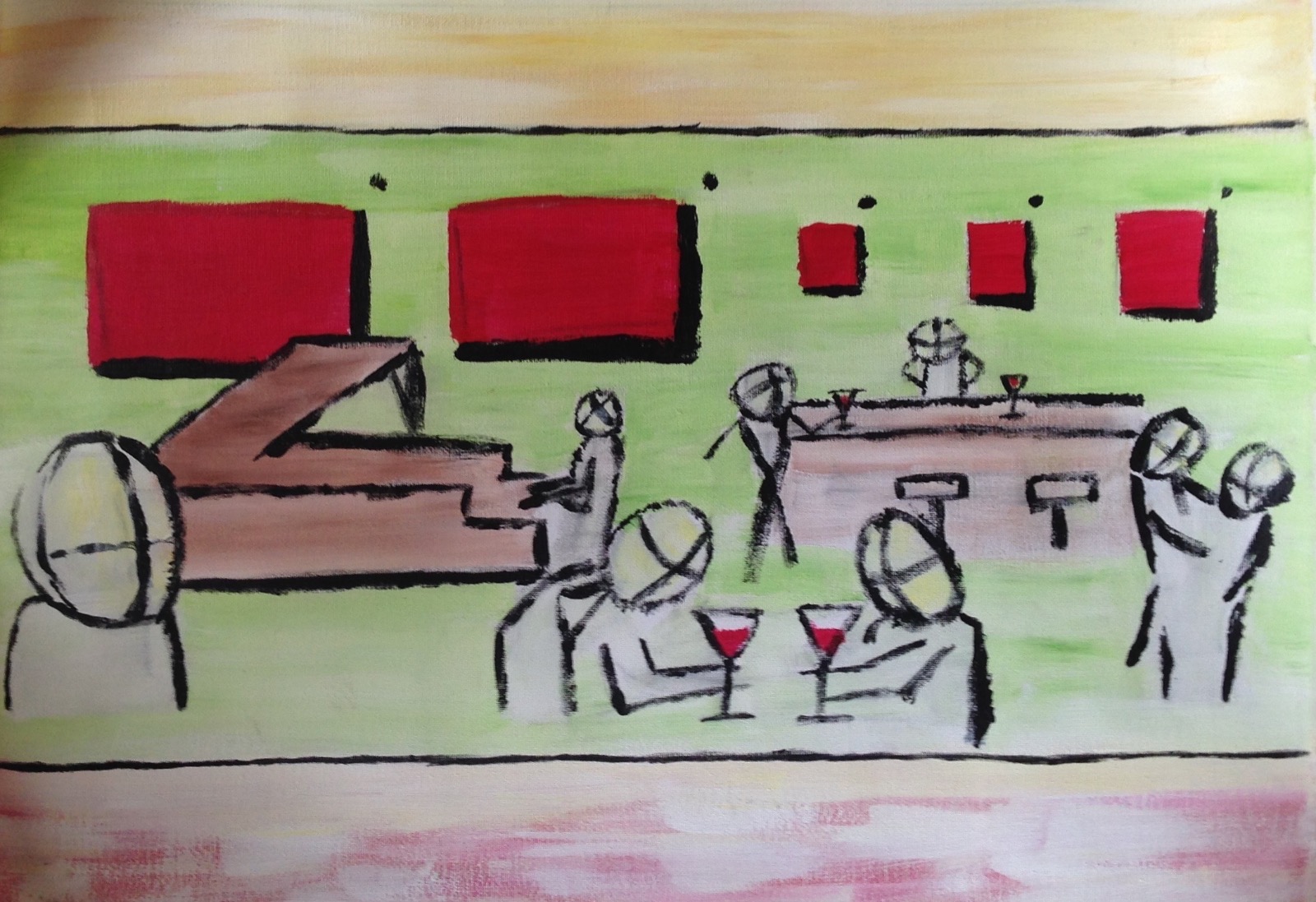
When we look for original art, we naturally think about the visuals, things like the way the colours will lift a dark corner, or how the movement of the brushstrokes will inject life into a quiet room.
But there is another, completely invisible way a large canvas changes a room, and it’s something very few people talk about: acoustics.
If you live in a modern or recently renovated home, you likely have beautiful hard surfaces. Polished concrete, engineered oak floors, vast glass bifold doors, and crisp, clean plaster walls are stunning. But they come with a built-in downside. They turn your living space into a giant echo chamber.
If you’ve ever noticed that family conversations sound a bit loud, or that the television audio bounces harshly off the walls, a large original canvas might be exactly what your room is asking for.
How a canvas acts as a natural sound dampener
You don’t need to clutter your beautiful home with ugly, industrial acoustic foam panels to soften the sound. A hand-painted canvas does the job naturally, subtly, and beautifully.
When sound waves travel through an echoey room, they hit flat, hard walls and bounce straight back into the space. But look at how a traditional canvas is constructed:
The Hollow Back: A quality canvas is stretched over a sturdy wooden frame, leaving a pocket of air behind the fabric. When sound waves hit the canvas, it vibrates slightly, trapping the sound energy in that hollow pocket rather than reflecting it back into the room.
The Texture of the Paint: Unlike a digital print behind sharp, reflective glass, an original acrylic painting has a textured, microscopic topography. The ridges, valleys, and layers of the paint scatter sound waves in different directions, breaking up the harshness of the echo.
The Fabric Itself: The heavy woven cotton or linen canvas acts as a soft membrane, absorbing high-frequency sounds like the clatter of cutlery in an open-plan kitchen or the sharp ring of a telephone.
Using art to improve your room's acoustics allows you to keep your minimalist, clean aesthetic without sacrificing comfort. It bridges the gap between a house that looks like a gallery and a home that feels like a sanctuary.
When you place a large statement painting in an open-plan kitchen/diner or a high ceilinged hallway, you aren't just filling a blank space on the wall. You are softening the ambient noise, making your evening meals feel more intimate and your mornings feel calmer.
Where to Place Art for the Best Acoustic Impact
If you want to get the most out of your painting's hidden superpower, think about "parallel surfaces."
If you have a large glass wall or a set of bifold doors, the wall directly opposite them is the prime candidate for a large canvas. By placing the soft, textured surface of a painting directly opposite a hard, reflective surface like glass, you intercept the sound waves before they can bounce back and forth across the room.
Choosing art will always be an emotional, visual decision first. But knowing that your favourite painting is also working quietly in the background to make your home a peaceful, cosy space to live in? That is a pretty spectacular bonus.